Projekt ForeSightNEXT
Anfang 2023 reichten wir zusammen mit zahlreichen Projektpartnern beim Bundesministerium für Wirtschaft und Klimaschutz eine Skizze im Rahmen des Technologieprogramms „Entwicklung digitaler Technologien“ und dem Förderaufruf „SmartLivingNEXT“ ein. Diese wurde Mitte 2023 zur Förderung bewilligt.
Was hatten wir uns vorgenommen?
Das Ziel unserer Projekts „ForeSightNEXT“ war es, für die Entwickung von KI-Anwendungen auf ausreichend Daten zum Erlernen ihrer Intelligenz zurückgreifen zu können, ohne diese explizit „einsammeln“ zu müssen. Das Zauberwort für die Antwort auf diese Aufgabe lautete „Datenraum“. Die Idee dahinter ist eine Plattform, auf der Daten angeboten und für definierte Zwecke angefragt werden können, aber immer sicher und fair und unter Berücksichtigung aller Datenschutzregeln: „ForeSightNEXT, Plattform für Daten, künstliche Intelligenz und Services im Smart-Living-Ökosystem“.
Weshalb engagierten wir uns in dem Projekt?
Für viele Aufgaben, die der Gesetzgeber an uns als Wohnungswirtschaft z. B. im Rahmen der CO2-Reduktion stellt, benötigen wir Daten, die uns nicht oder nicht in einem Format zur Verfügung stehen, dass wir damit arbeiten, Schlüsse ziehen, Maßnahmen planen können. Andererseits wäre es z. B. für Kommunen oder Energieversorger für die kommunale Wärmeplanung hilfreich zu wissen, welche Planungen wir bzgl. unserer Mehrfamilienhäuser haben, ob wir z. B. Heizungen von Gas auf Strom umstellen und Elektro-Mobilität unterstützen wollen und daher mehr Strom benötigen oder aber PV-Anlagen installieren und deshalb Strom liefern.
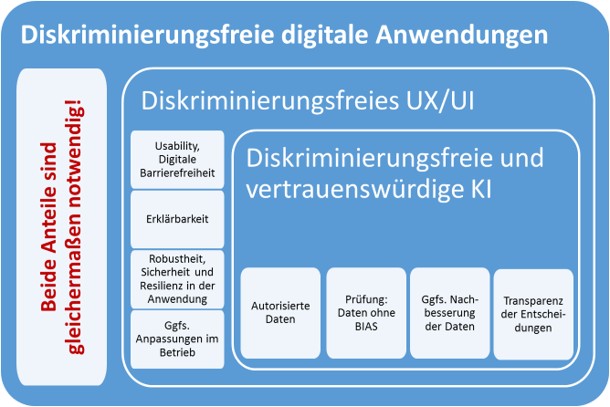
Da die Kunden der Wohnungswirtschaft sehr verschieden bzgl. ihres Alters, ihrer Bildung, ihrer Herkunft, ihrer finanziellen Situation sind, war es uns ein wichtiges Anliegen darauf hin zu wirken, dass KI-Services nicht „aus Versehen“ Menschen diskriminieren. Ein Arbeitsschwerpunkt für uns als GSW Sigmaringen war es daher, darauf zu achten, dass die übrigen Beteiligten sich des Problems der Diskriminierung bewusst sind, dass Demonstratoren und Prototypen den Richtlinien der digitalen Barrierefreiheit entsprechen.
Research at Future Living® Berlin
The goal was to use anonymized electricity usage data to determine the electricity demand of a building complex such as Future Living® Berlin at different times of day. Combined with a weather forecast, the aim was to develop AI services capable of predicting, among other things, the demand for heating, hot water, residential consumption, and electric vehicle charging.
SmartLivingNEXT wurde

In early 2023, together with numerous project partners, we submitted a proposal to the Federal Ministry for Economic Affairs and Climate Action as part of the “Development of Digital Technologies” technology program and the “SmartLivingNEXT” funding call. This proposal was approved for funding in mid-2023.
What did we set out to do?
The goal of our “ForeSightNEXT” project was to ensure that developers of AI applications could access sufficient data to train their AI systems without having to explicitly “collect” it. The magic word for solving this challenge was “data room.” The idea behind it is a platform where data can be offered and requested for defined purposes, but always securely and fairly, in compliance with all data protection regulations: “ForeSightNEXT, a platform for data, artificial intelligence, and services in the smart living ecosystem.”
Why did we get involved in this project?
For many of the tasks that lawmakers have assigned to us as the housing industry—for example, in the context of CO2 reduction—we need data that is either unavailable or not available in a format that allows us to work with it, draw conclusions, and plan measures. On the other hand, it would be helpful for municipalities or energy providers, for example, in the context of municipal heat planning, to know what plans we have for our apartment buildings—whether, for instance, we intend to switch heating systems from gas to electricity and support electric mobility, thereby requiring more electricity, or whether we plan to install solar panels and thus generate electricity.
Since customers in the housing sector vary greatly in terms of age, education, background, and financial situation, it was important to us to ensure that AI services do not “accidentally” discriminate against people. A key focus of our work at GSW Sigmaringen was therefore to ensure that the other stakeholders are aware of the issue of discrimination and that demonstrators and prototypes comply with digital accessibility guidelines.
Untersuchungen in Future Living® Berlin
Aus anonymisierten Daten der Stromnutzung sollte erkannt werden, zu welchen Zeiten ein Gebäudekomplex wie Future Living® Berlin welchen Bedarf an Strom hat. Kombiniert mit einer Prognose zur Wetterentwicklung sollten KI-Services entwickelt werden, die u. a. den Bedarf für Wärme, Warmwasser, Privatverbrauch, Ladestrom von Autos vorhersagen sollten.
SmartLivingNEXT was supported by